
Choosing the Right Barcode Scanner for Your Retail Business
When managing a retail business, efficiency is key. One of the most critical tools in ensuring smooth operations is the barcode scanner. Selecting the right scanner can enhance inventory management, speed up transactions, and ultimately improve customer satisfaction. In this post, we will explore various factors in choosing the right barcode scanner for your retail business.
Understanding Retail Barcode Scanners
Retail barcode scanners serve a crucial role in managing products and speeding up checkout processes. These devices read the barcodes on products to quickly obtain pricing and inventory information. There are several types of scanners available, each suited for specific environments and needs.
For instance, a handheld scanner is great for smaller retail outlets. In contrast, fixed-mounted scanners may be more suitable for high-volume checkout counters. Understanding the differences will help you choose one that fits your retail setting perfectly.

Types of Barcode Scanners for Retail
There are several different types of barcode scanners available on the market today. Below are the most common types, each with its own set of advantages and disadvantages.
1. Handheld Barcode Scanners
Handheld scanners are among the most popular options, allowing employees to freely move around the store and scan items. They come in both wired and wireless options. Wireless models offer greater flexibility, but they often require charging.
Example: A typical handheld scanner can scan products at a rate of over 100 scans per minute. This factor can significantly enhance the checkout experience during high-traffic hours.
2. Fixed-Mount Barcode Scanners
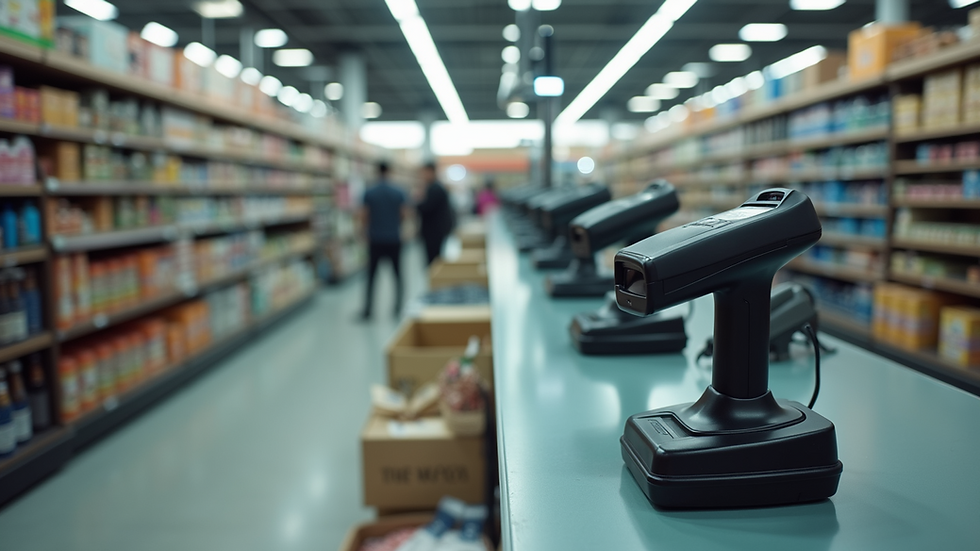
Fixed-mount scanners are typically found at checkout counters. They are mounted in a stationary position, allowing customers to present items hands-free. This setup is beneficial for high-volume sales environments.
Example: A grocery store may use fixed-mount scanners to facilitate quick customer checkouts, significantly reducing wait times.
What Type of Barcode Do Retail Stores Use?
Retail stores commonly utilize UPC (Universal Product Code) barcodes. UPCs are beneficial as they enable quick identification of products and streamline the purchasing process.
Statistics: Over 5 billion UPC barcodes are scanned each day in the United States alone, highlighting their effectiveness in facilitating quick sales transactions.
Different types of barcodes serve different needs. For example, QR codes are increasingly popular due to their versatility and ability to link customers to websites or promotions. However, UPC remains the standard in most retail settings.

Factors to Consider When Choosing a Barcode Scanner
When selecting a barcode scanner for your retail business, consider the following factors:
1. Scan Speed
Speed is crucial in a retail environment. Look for barcode scanners that can handle quick scanning to minimize wait times. A high-speed scanner can process a barcode in less than a second.
2. Connectivity
Consider how the scanner will connect to your existing systems. USB, Bluetooth, and Wi-Fi connectivity options can make a difference depending on your store setup. Wireless options offer greater flexibility and can be beneficial in larger retail spaces.
3. Durability
In retail, scanners may be used in various environments, from the sales floor to the stockroom. Opt for a model that is durable and can withstand drops or spills. Look for devices with IP ratings that indicate their resistance to dust and moisture.
4. Compatibility
Ensure the scanner you choose is compatible with your existing point of sale (POS) systems. Many modern scanners support a wide range of software applications.
5. Budget
Prices for barcode scanners can range widely. While it’s essential to stay within your budget, remember that investing in a quality scanner can pay off in the long run through enhanced operational efficiencies and improved customer experiences.
Successful Implementation of Barcode Scanners
Introducing a new barcode scanner into your retail operation requires planning. Here are steps to ensure a successful implementation:
1. Train Your Staff
Provide adequate training to employees on how to use the new scanner effectively. This training is vital for ensuring that staff can quickly adapt to the technology.
2. Test Before Full-Scale Deployment
Before fully implementing the scanner in all locations, test it in a controlled environment. Identify any issues with scanning or connectivity and make adjustments as needed.
3. Monitor Performance
Once implemented, monitor the scan rates and identify ways to streamline operations. Gathering feedback from employees can provide insights into potential improvements.
4. Update Systems as Needed
Ensure your software systems are updated to support the new scanner technology. Regular updates can often improve efficiency by ensuring the hardware functions correctly with your POS system.
By following these steps, you can integrate barcode scanners smoothly into your retail operations, facilitating better customer service and operational efficiencies.
Final Thoughts
Choosing the right barcode scanner for your retail business is not a decision to be taken lightly. Numerous factors, including scan speed, connectivity, and durability, should influence your choice. By carefully considering your specific needs and following best practices for implementation, you can greatly enhance your business efficiency and customer satisfaction. For a comprehensive view of available options, you may check the various barcode scanners for retail at Kenrod.
Investing the time and resources into selecting the right scanner will ultimately pay dividends in the smooth operation of your retail business. Happy scanning!


Comments